Exploring the Artistic and Functional Appeal of Ocean Wave Font
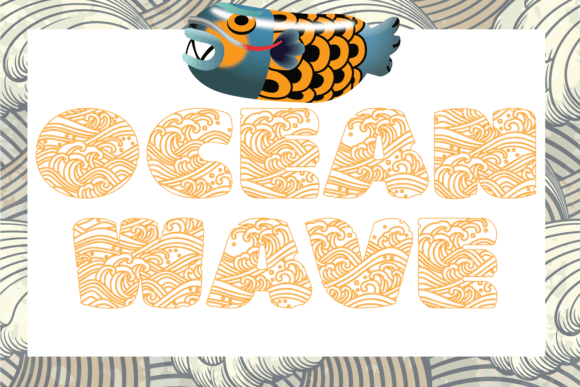
The Ocean Wave font, inspired by the iconic painting The Great Wave off Kanagawa by Katsushika Hokusai, brings a unique blend of artistic heritage and modern design versatility to typography. This decorative font, with its upper and lowercase characters that mimic the undulating motion of waves, offers a handcrafted feel that resonates across various creative fields. As a typeface rooted in Japanese artistry, it carries the weight of centuries-old tradition while adapting to contemporary design needs.
The Origins of Ocean Wave: A Typographic Tribute
The Great Wave off Kanagawa, part of Hokusai’s Thirty-Six Views of Mount Fuji series, is not only a masterpiece of ukiyo-e woodblock printing but also a symbol of nature’s power and beauty. The swirling wave at the center of the painting captures the essence of movement and energy, which has been translated into the flowing curves of the Ocean Wave font. By drawing from this cultural touchstone, the font bridges the gap between historical art and digital design, making it a valuable tool for designers who seek authenticity and visual storytelling.
The Ocean Wave font is more than just an aesthetic choice; it reflects a deep respect for traditional Japanese art forms. Its use of fluid lines and organic shapes mirrors the brushstrokes found in Hokusai’s work, offering a sense of craftsmanship that is often missing in mass-produced fonts. This attention to detail makes it particularly appealing to professionals who value both function and form in their typographic choices.
Characteristics That Define Ocean Wave
One of the most distinctive features of the Ocean Wave font is its ability to evoke motion through its character design. Each letter seems to flow like water, with sweeping ascenders and descenders that create a dynamic visual rhythm. The uppercase letters are bold yet elegant, while the lowercase letters maintain a soft, curvilinear quality that enhances readability without sacrificing style.
This font is especially well-suited for projects that require a balance between legibility and artistic flair. The contrast between thick and thin strokes adds depth and dimension to text, making it ideal for headings, logos, and other design elements where impact is key. Additionally, the font’s decorative nature allows for creative experimentation, such as incorporating it into illustrations or pairing it with simpler sans-serif fonts for contrast.
Use Cases Across Industries
The versatility of the Ocean Wave font means it can be applied in a wide range of contexts. For instance, in the world of stationery design, it can be used to create invitations, greeting cards, and thank-you notes that stand out with a touch of elegance and originality. Its fluidity makes it perfect for capturing the essence of oceanic themes, whether for a coastal wedding or a marine-themed event.
In business card design, the Ocean Wave font can help professionals make a lasting impression. It adds a unique personality to contact information, allowing individuals to express their creativity while maintaining a professional appearance. When used sparingly, it can elevate the overall look of a business card without overwhelming the viewer.
For logo design, the Ocean Wave font offers a fresh alternative to conventional sans-serif or serif fonts. Its handcrafted feel can communicate a brand’s commitment to quality and individuality. Whether used as a primary or secondary font, it can contribute to a visually cohesive brand identity that stands out in a crowded market.
Designers working on web design projects may find the Ocean Wave font useful for creating headers, banners, or call-to-action buttons that draw attention and encourage engagement. However, due to its ornate nature, it should be used judiciously to avoid cluttering the layout.
Considerations for Using Ocean Wave
While the Ocean Wave font is visually striking, it is important to consider its practical implications before using it in any project. Because of its decorative style, it may not be the best choice for body text or long-form content where readability is paramount. Instead, it works best when used for headlines, titles, or short bursts of text where visual impact is desired.
Another consideration is the file size and loading speed of the font. Decorative fonts like Ocean Wave tend to be larger in file size compared to standard fonts, which can affect website performance if not optimized properly. Designers should ensure that they are using the appropriate format (such as WOFF or WOFF2) and that the font is only loaded when necessary.
Additionally, compatibility across different platforms and devices should be taken into account. While the Ocean Wave font may render beautifully on desktop computers, it could appear differently on mobile devices or in certain web browsers. Testing the font across multiple environments is essential to ensure consistency and usability.
Pairing Ocean Wave with Other Fonts
To maximize the effectiveness of the Ocean Wave font, it is often paired with complementary typefaces that provide contrast and enhance readability. For example, pairing it with a clean sans-serif font like Helvetica or Arial can create a balanced composition that combines elegance with clarity. Similarly, using a minimalist serif font alongside Ocean Wave can add sophistication to a design while keeping the overall look harmonious.
When selecting fonts to pair with Ocean Wave, it is important to consider the purpose of the design. For a more formal or professional look, a serif font might be more appropriate, while a sans-serif font could be better suited for a modern or casual aesthetic. Experimentation with different combinations can lead to unique and effective design solutions.
Ultimately, the Ocean Wave font is a powerful tool that can enhance the visual appeal of a wide range of projects. Its connection to Hokusai’s iconic artwork adds a layer of cultural significance that can resonate with audiences around the world. Whether used in print or digital media, this font offers a unique way to express creativity and connect with the rich traditions of Japanese art.