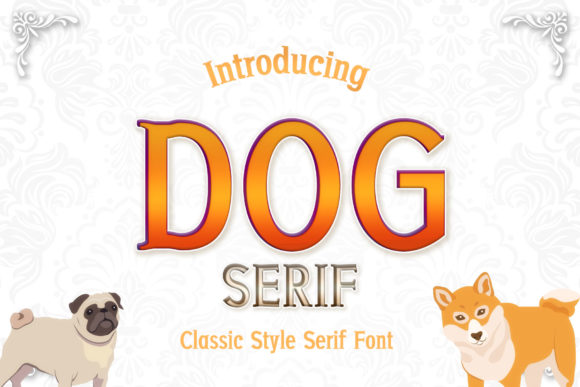
Dog: A Minimal and Neat Serif Font for Versatile Design Projects
The Dog font is a minimalist serif typeface that has been gaining attention among designers for its clean lines, balanced proportions, and subtle elegance. Unlike more ornate or overly stylized fonts, Dog offers a neutral yet refined appearance that can be seamlessly integrated into a wide range of design contexts. Whether used in branding, editorial design, digital interfaces, or print media, its simplicity allows it to remain unobtrusive while still maintaining visual appeal.
What makes Dog stand out is its ability to adapt without compromising on quality. Its letterforms are carefully crafted to ensure legibility across various sizes and mediums. The serifs are not too pronounced, avoiding the heaviness of traditional serif fonts while retaining the warmth and readability often associated with them. This balance makes Dog particularly well-suited for projects where clarity and professionalism are key.
Understanding the Characteristics of Dog
Dog is designed with a focus on minimalism, which means it avoids unnecessary embellishments or decorative elements. This approach results in a font that feels modern and streamlined. The spacing between letters (kerning) is optimized for both readability and aesthetic harmony, ensuring that text appears crisp whether viewed on a screen or printed on paper.
One of the most notable features of Dog is its versatility. It can be used for body text in long-form content, headlines, logos, and even as a base for custom typography. Because it lacks excessive ornamentation, it serves as a strong foundation for creative experimentation. Designers can easily pair it with other fonts or modify it to suit specific brand identities.
The font’s neutrality also plays a role in its adaptability. While some fonts have a distinct personality that may limit their use in certain contexts, Dog remains flexible enough to work across different industries and applications. This makes it an excellent choice for businesses looking for a font that can evolve alongside their brand over time.
How Dog Compares to Similar Fonts
When considering alternatives to Dog, it's important to understand how it fits within the broader landscape of serif fonts. Fonts like Georgia, Times New Roman, and Garamond are commonly used for similar purposes but each has its own unique characteristics. For example, Georgia is known for its improved readability on screens, while Garamond has a more classical and elegant feel.
Dog occupies a middle ground between these options. It shares some of the readability benefits of Georgia but maintains the refined appearance of Garamond without being overly formal. This makes it a good compromise for designers who want something that feels professional but isn’t too rigid or outdated.
Compared to sans-serif fonts such as Helvetica or Arial, Dog offers a slightly more traditional and sophisticated look. However, this doesn't mean it’s only suitable for print media. In fact, its clean design ensures that it performs well on digital platforms as well, making it a versatile option for web design and mobile interfaces.
Strengths and Tradeoffs of Using Dog
The primary strength of Dog lies in its simplicity and adaptability. It provides a clean, readable base that can be tailored to fit a variety of design needs. This makes it ideal for projects that require a font that won’t overshadow the content but will still contribute to an overall sense of professionalism.
However, there are also tradeoffs to consider. Because Dog is so minimal, it may not be the best choice for projects that require a strong visual identity or a more distinctive typographic style. If a brand wants to make a bold statement through typography, Dog might not provide the level of impact needed. In such cases, a more expressive or stylized font could be a better fit.
Another consideration is that Dog may not offer the same level of customization as some other fonts. While it is highly adaptable, it may not support advanced typographic features such as ligatures or extensive language support. For multilingual projects or those requiring complex typographic treatments, this could be a limitation.
Best-Fit Situations for Dog
Dog is particularly well-suited for projects where clarity and subtlety are priorities. It works exceptionally well in corporate communications, academic publications, and user interfaces where the goal is to present information clearly and professionally.
In branding, Dog can serve as a reliable choice for logos and business cards. Its clean lines and balanced proportions give a sense of trustworthiness and reliability, which are valuable traits for many brands. Additionally, because it pairs well with a wide range of other fonts, it can be used effectively in multi-font designs without clashing.
For digital projects, Dog’s performance on screens is another advantage. Its design ensures that it remains legible at smaller sizes, making it a good option for websites, apps, and e-books. However, for highly visual or artistic projects, designers may need to explore other options that allow for more creative expression.
When to Consider Alternatives
While Dog is a strong choice for many design scenarios, there are situations where it may not be the best fit. If a project requires a more distinctive or expressive font, designers should consider alternatives that offer greater stylistic variation. Fonts like Playfair Display or Baskerville provide a more dramatic and ornate look that can add character to a design.
Additionally, if a project involves multiple languages or requires specialized typographic features, designers may need to choose a font that supports a wider range of characters and scripts. In these cases, fonts like Open Sans or Lato might be more appropriate due to their broader language support and additional typographic features.
Ultimately, the decision to use Dog should be based on the specific needs of the project. It’s important to evaluate factors such as readability, aesthetics, and compatibility with other design elements before making a final choice.
Practical Examples and Comparisons
To illustrate how Dog performs in real-world scenarios, consider a comparison between using Dog and Georgia for a website’s body text. Both fonts are readable on screens, but Dog’s more modern and streamlined appearance gives it a slight edge in terms of visual appeal. It also blends well with contemporary design trends, making it a good choice for websites that aim to appear up-to-date and professional.
In contrast, when designing a logo for a luxury brand, a font like Playfair Display might be more appropriate due to its more elaborate and elegant appearance. Dog, while still refined, may not convey the same level of sophistication or exclusivity that some luxury brands seek to communicate through their typography.
For a magazine layout, Dog could be paired with a sans-serif font like Helvetica for headings, creating a clean and balanced composition. This combination would work well for a publication that wants to maintain a modern and accessible look while still providing a professional finish.
These examples highlight how Dog can be used effectively in a variety of contexts, but they also demonstrate that it may not always be the best choice for every situation. Understanding the strengths and limitations of Dog helps designers make informed decisions that align with their project goals.
Making an Informed Decision
Choosing the right font is an important part of any design process, and Dog offers a compelling option for those seeking a minimalist and versatile serif typeface. Its clean lines, balanced proportions, and adaptability make it suitable for a wide range of projects, from corporate communications to digital interfaces.
However, it’s important to recognize that no single font is perfect for every situation. Designers should evaluate their project requirements and consider how Dog fits within the broader context of their design choices. By understanding the strengths, tradeoffs, and best-fit scenarios for Dog, designers can make more informed decisions that lead to effective and visually appealing results.
Whether you're working on a new brand identity, redesigning a website, or preparing a publication, taking the time to explore different font options—including Dog—can help ensure that your final design meets both functional and aesthetic goals.